
Detroit-style pizza
Rectangular pan, thick dough, cheese pushed to the edges so it caramelizes against the metal. Forgiving on a home oven and easy to portion for a family.
1290 North Wells Street, Chicago, IL 60610, USA
Monday to Friday, 9:00 AM – 6:00 PM
+1-312-555-0723 [email protected]
1290 North Wells Street, Chicago
A Chicago cooking project publishing tested artisan pizza recipes and hands-on masterclasses. Pizzeria-style crust from a normal home oven, built around high-hydration dough, a cold ferment pizza schedule, and a pizza steel.
The key to the field
Seven lead lines cross the dough above. Each one names a structure you will learn to control — not a topping, not a gadget. This is the order we teach them in.
Most home cooks blame the oven. Usually the dough was rushed. Our recipe packs are built around high-hydration dough, cold ferment pizza schedules, and a stretch-and-fold routine that fits into a working week.
You mix on Thursday evening, shape on Saturday, and bake when the oven has had a full hour to heat. A pizza steel or a bake stone does the rest, turning a standard 500 to 550 F oven into something that behaves closer to a deck oven. The crust comes out blistered on top and crisp on the bottom, which is the whole point.
None of it needs a wood-burning dome, a restaurant range, or a pastry background. You need a bowl, a scale, a fridge, and a plan for the next 24 hours.
Beginners do best when they pick one style and repeat it, not when they sample everything in a month. Here is the short version of what each one asks of you.
Rectangular pan, thick dough, cheese pushed to the edges so it caramelizes against the metal. Forgiving on a home oven and easy to portion for a family.
High heat, fast bake, blistered crust, and a sauce that stays bright instead of cooking down. The hardest to chase at home, and the most rewarding when the surface is hot enough.
A longer ferment and a crisper, lighter base you can cut into squares. Good for feeding a table because the dough holds up as it cools.
Rolled thin, baked hot, cut into squares, and easy to eat standing up. Lower hydration than the others, which makes it a gentle first dough if you have never worked with wet dough.
Regional pizza styles have been getting more attention in trend coverage, and it shows in what students ask for. Detroit-style pizza in particular has moved from a niche format into wider awareness, partly because a thick, rectangular pie with caramelized cheese edges is hard to scroll past. You can read the full breakdown, with dough notes for each one, in the pizza styles guide.
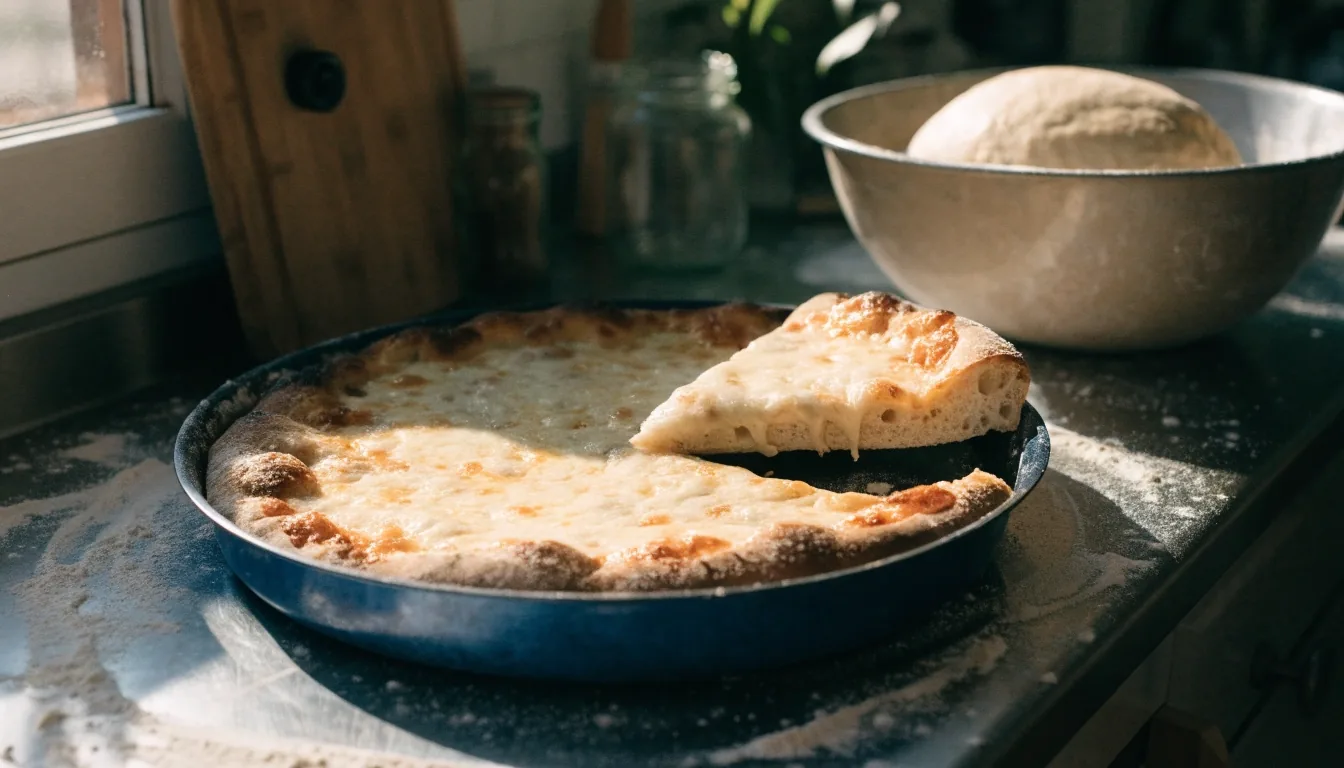
The caramelized edge that defines a Detroit-style slice
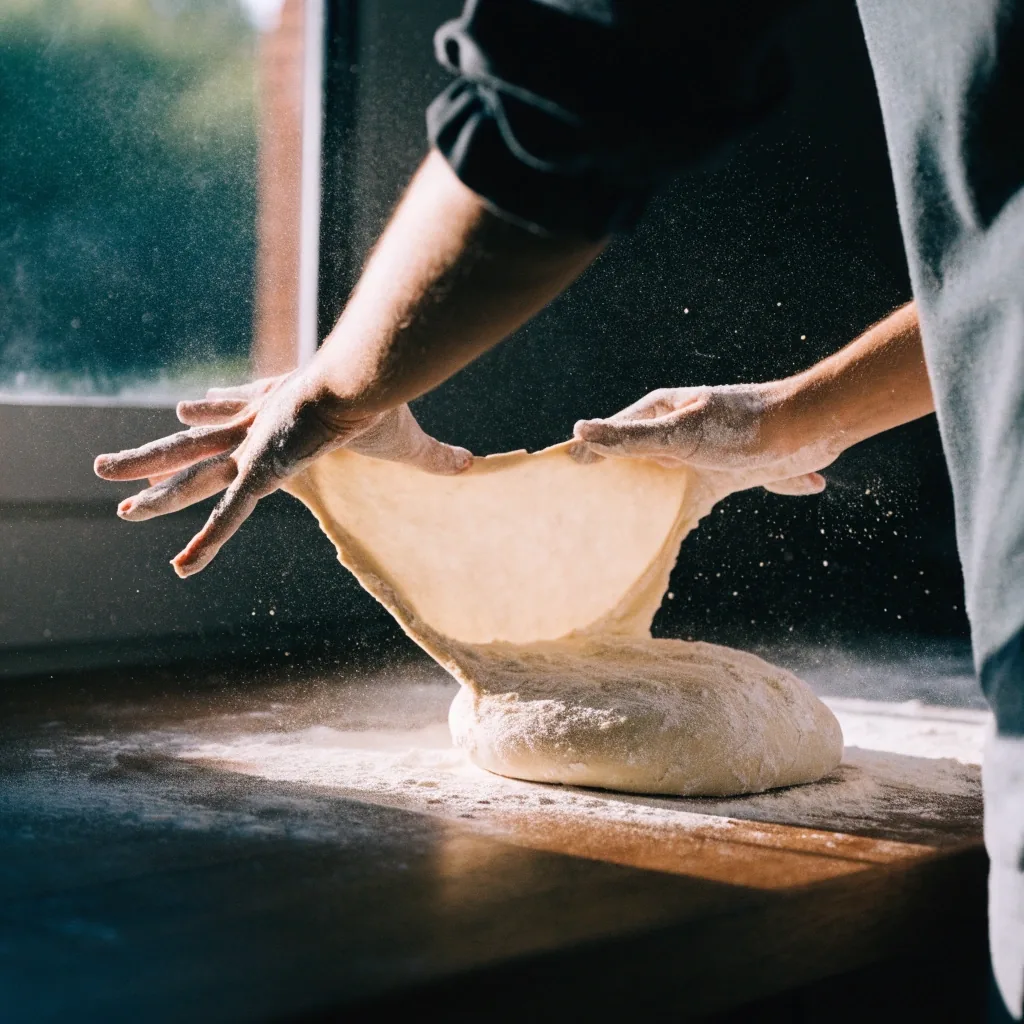
A recipe page can tell you the hydration percentage. It cannot tell you that your dough feels tight because the kitchen is cold.
In a Chicago masterclass you stretch, fold, and shape with your own hands while someone corrects your grip. The sessions run in our Wells Street studio and cover dough-making, kneading, proofing, and shaping, then move into sauces, toppings, and baking on a stone or steel. Class listings on consumer marketplaces often stress that no experience is needed, and that matches how we run the room. Absolute beginners and people who have been baking for years sit at the same bench.
Groups stay small on purpose. Hands-on help only works when there is time to stand next to each person at the bench.
See masterclass datesTwo things matter more than any topping.
First
A cold ferment pizza gives the dough time to develop flavor and a structure that puffs under heat instead of tearing. Skip it and the crust stays flat and pale no matter how hot the oven runs.
Second
A pizza steel transfers heat into the base faster than a stone, which is why the bottom sets before the toppings have a chance to steam. If you want a wood-fired finish at home, you are chasing the same result with different equipment: a very hot surface and a short bake.
Get those two right and the difference between your kitchen and a pizzeria narrows a lot. The dough and oven basics guide walks through steel versus stone, preheat times, and the setup for a standard domestic oven.
Start with dough and oven basicsA
If you already cook and want a tested schedule you can follow alone. The packs include the dough formulas, the fermentation timelines, and the baking setup notes for a standard oven.
B
If you learn better by doing it once with someone watching, or if you have tried and failed and cannot tell where it went wrong. The class adds the part that is hard to write down, which is how the dough should feel at each stage.
C
Plenty of students do. A class first, then a pack to keep the routine going at home on your own bench, in your own oven, on a weekday.
Trend reporting keeps noting that people are trading restaurant occasions for meals at home, and pizza is one of the easiest meals to make feel special. Frozen pizza has moved from a backup in the freezer to a planned dinner in some households, which tells you how much expectations have risen.
We do not try to replicate a commercial kitchen. We work with what a home cook owns: a domestic oven, a stone or steel, a peel, and a fridge. The goal is a repeatable result you can hit on a Tuesday, not a one-time stunt that depends on luck and a free weekend.
Dough technique is the foundation, but finishing is where modern pizza gets fun.
Hot honey is a good example. It shows up in current masterclass descriptions and on menus because sweet heat balances salty cheese and a tangy sauce. Once your base is reliable, you can play with finishing touches without wrecking the bake. The order still matters: sauce, cheese, then anything wet or sugary after the oven.
Learn the structure first, then experiment. That sequence is why students who start with a plain pie tend to improve faster than students who load up from day one.
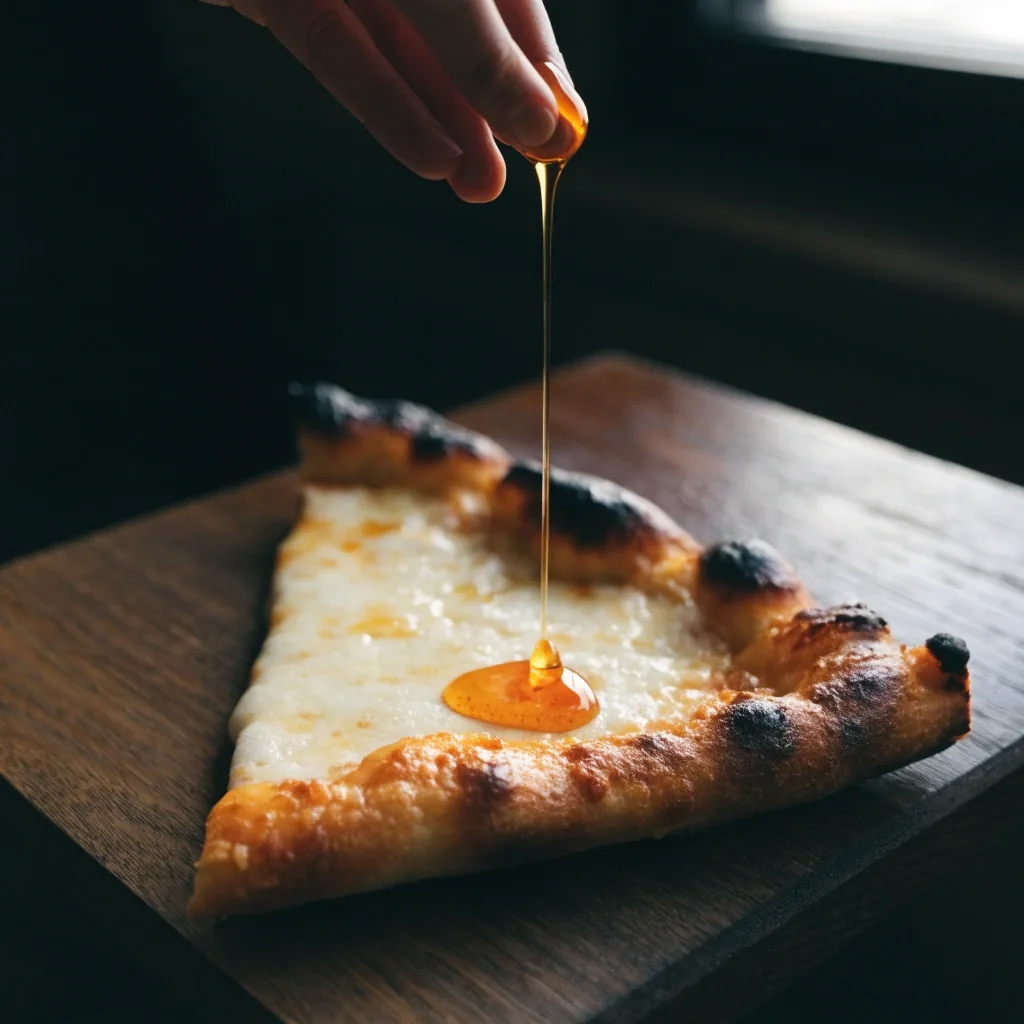
The recipe collection suits home cooks who want to move past good-enough pizza. Where you start depends on what you already do.
Start with the beginner pack and the basics guide. One dough, three weekends, no changes in between.
You will move quickly into high-hydration dough and cold ferment schedules, and you will recognize the feel sooner than you expect.
If you own a pizza steel and a peel and the bottom still will not crisp, the dough and oven basics guide is probably your next stop.
We write for people who cook in real kitchens with real time limits, not for test kitchens.
Every recipe gets baked repeatedly in a standard home oven before it goes on the site, and again in the studio before it goes into a class.
When a formula only works with a specific flour or an unusually hot oven, we say so in the notes instead of hiding it. Feedback from classes feeds back into the written recipes. If a step confuses a room of eight people, it needs rewriting. That loop is the reason the packs read more like a working method than a list of ingredients.
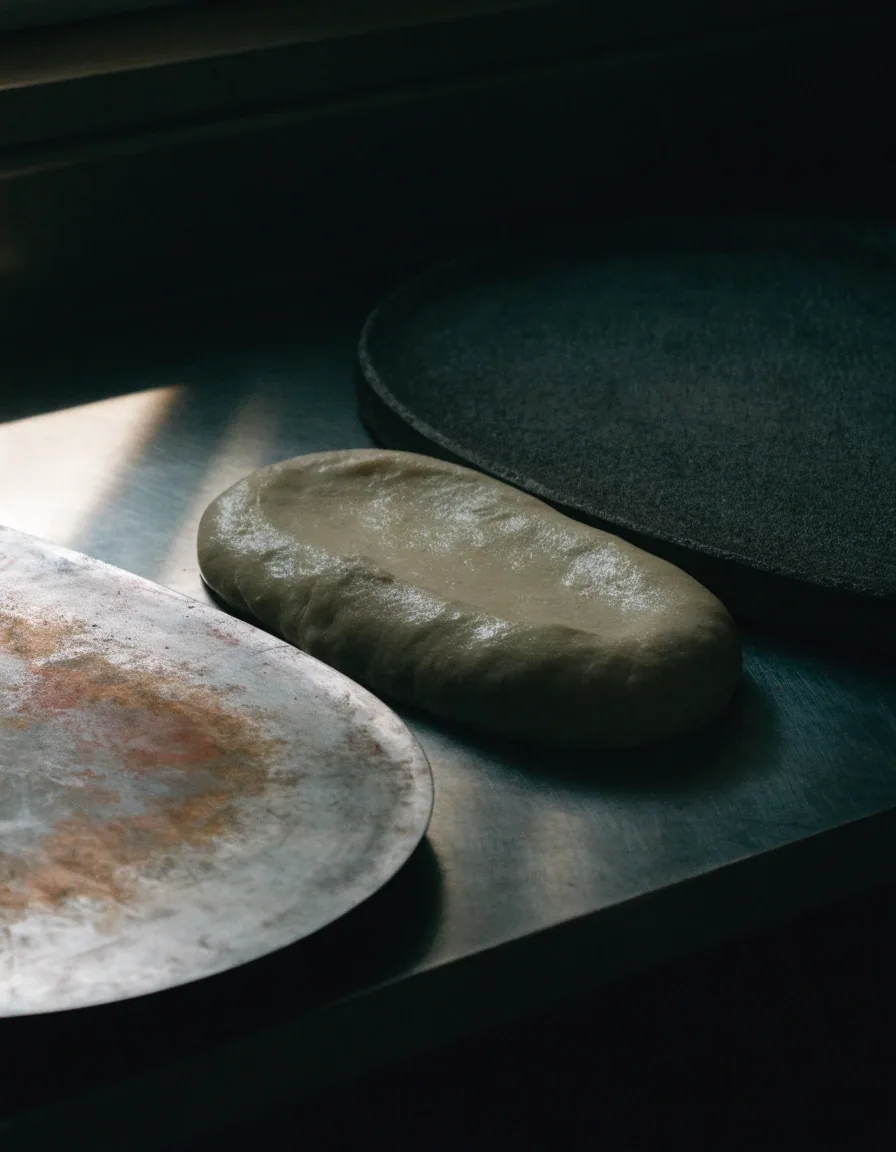
Steel on the left, stone on the right, same oven
Our studio is at 1290 North Wells Street in Chicago, IL 60610. It is a working kitchen built for small groups, not a demonstration hall.
You get a station, dough, and a bake you can eat before you leave. Sessions run for individuals, couples, and private groups, and we keep class sizes small enough that hands-on help is realistic. If you are coming from outside the city, ask about scheduling before you book travel, and we will tell you honestly what is available.
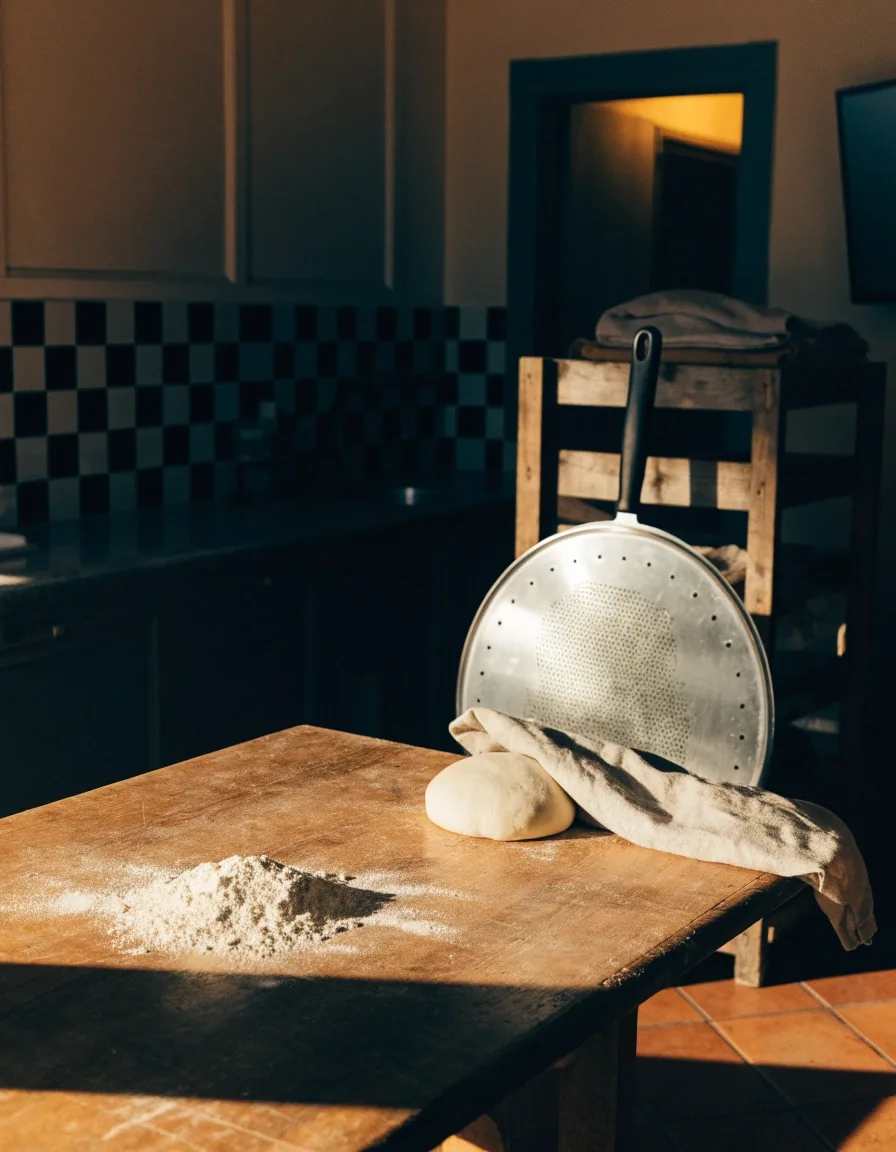
The Wells Street studio, empty before a session
Pick the style you actually want to eat. Make it three weekends in a row with the same recipe before you change anything.
Most frustration in home pizza baking comes from changing the flour, the hydration, and the oven setting all at once and then not knowing which change broke the crust. Learn one dough, then expand. Browse the recipe collection when you are ready to choose, or book a masterclass if you would rather learn it in a room with someone guiding your hands.
Yes, within limits. You will not match a 900 F wood-fired oven, but with a pizza steel or stone, a fully preheated oven, and a properly fermented dough, you can get a blistered crust and a crisp bottom at home. The recipes are written for domestic ovens.
A scale, a pizza steel (or a bake stone if you already own one), and a peel make the biggest difference. A special oven is optional. We cover setup in the dough and oven basics guide.
That depends on the style. Detroit-style and Roman-style doughs are generally higher hydration; Chicago thin is lower. Cold ferment pizza is the most forgiving schedule for home cooks because it separates mixing from baking by a day or more.
Preheating the steel or stone long enough matters more than most people expect. Bake hot and short, and add wet or sugary toppings after the oven rather than before.
No. Sessions are built for at-home cooks of all skill levels, and beginners are common.
Two ways in, and you can take either first. Read the recipe collection if you want to start on your own bench this weekend. Book a masterclass if you want your hands corrected while you learn.
Acf-P Pizza Academy is at 1290 North Wells Street, Chicago, IL 60610. Call the studio at +1-312-555-0723 during office hours, Monday to Friday, 9:00 AM – 6:00 PM.
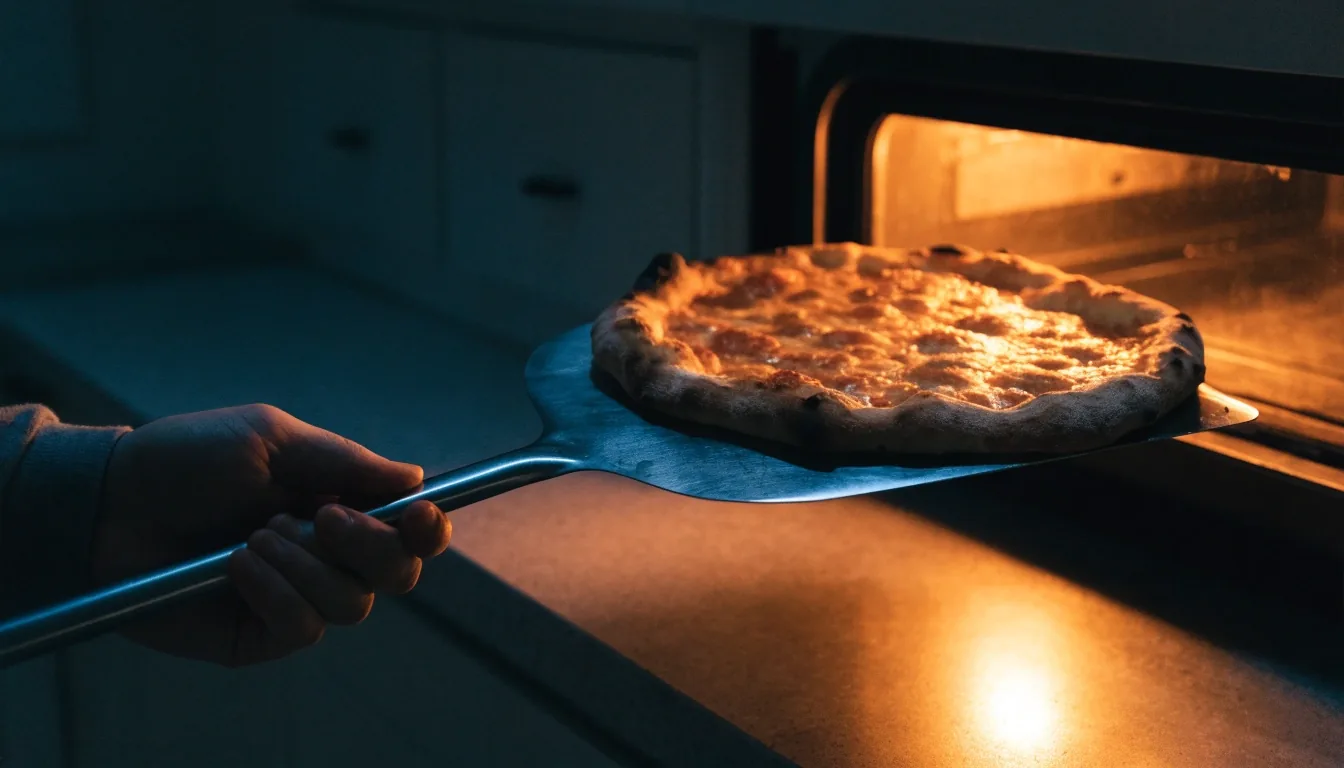
Out of the oven, straight onto the bench