
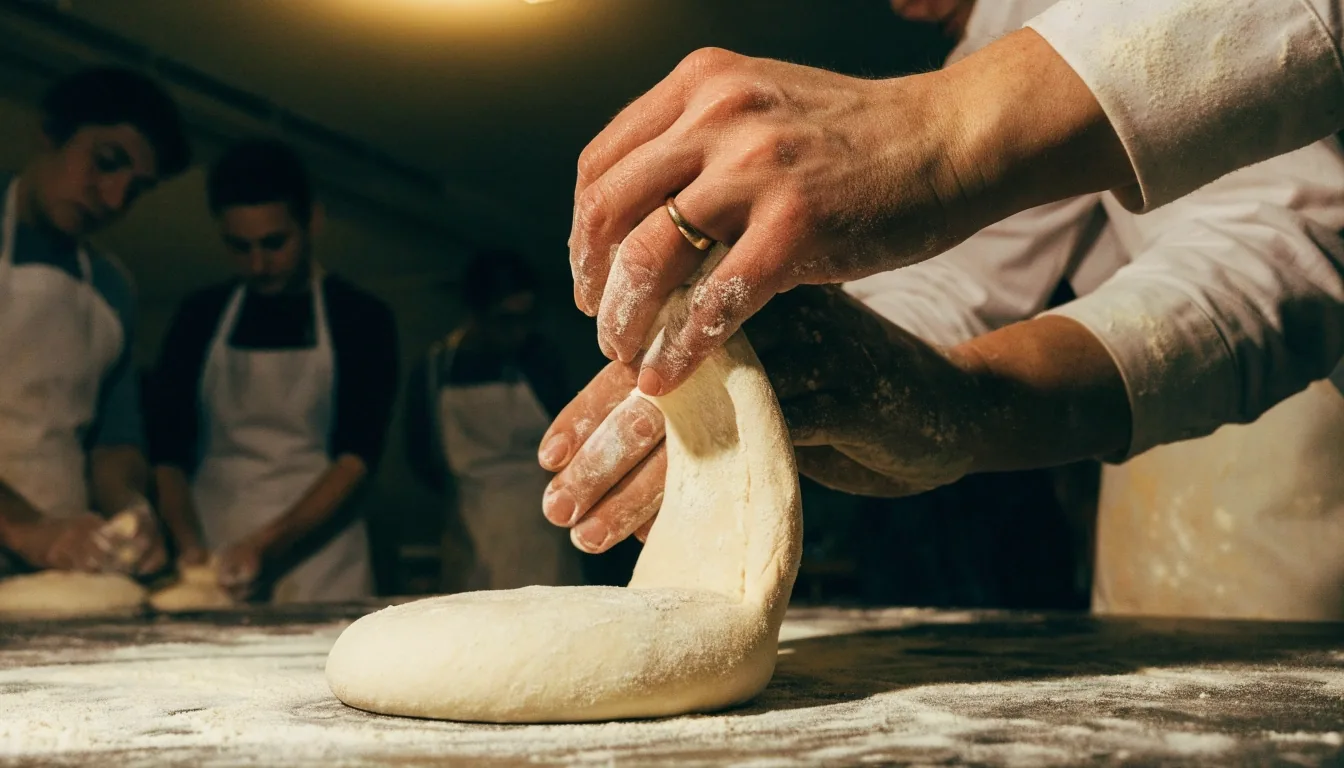
Chicago · 1290 North Wells Street
Who teaches at Acf-P Pizza Academy
We write artisan pizza recipes and run hands-on masterclasses for home cooks. The work is narrow on purpose: dough, oven setup, and the regional styles you can actually reproduce without commercial equipment.
A small cooking project, and the key to how we work
Acf-P Pizza Academy is a cooking project based at 1290 North Wells Street, Chicago, IL 60610. We are not a restaurant and not a recipe blog that publishes once and moves on. Everything on this site exists so a home cook can bake pizza in a normal oven, on a normal weeknight, with equipment that already lives in the kitchen. The lines below name the parts of that work, and each one is explained further down the page.
- Dough first
- Dough comes before styles. One formula, learned properly, outlasts five half-learned ones.
- Baked at home first
- Every recipe is baked in a standard home oven before it is ever taught in a class.
- Difficult steps labeled
- Steps that are genuinely hard are labeled hard. You find out in the notes, not at the bench.
- Small groups
- Classes run for small groups so an instructor can stand beside you while you shape.
- Recipes stay alive
- Recipe packs get updates when a step is rewritten, so the file you bought stays current.
- Plain about limits
- When a result depends on equipment you do not have, we say so and offer the closest alternative.
What we do and what we skip
We teach home pizza baking. That is the whole job. We do not run a restaurant, we do not sell frozen dough, and we do not claim to reproduce a 900 F wood-fired oven in a home kitchen. That honesty shapes everything here. A recipe that only works because a commercial deck oven holds heat in a way yours does not gets marked as such, and we describe what changes when you bake it in the oven you actually own.
The same rule applies to difficulty. Some steps in this craft are easy and some are not. Stretching a cold, high-hydration dough without tearing it is a skill that takes practice, and pretending otherwise wastes your evening. Where a step is hard, the recipe says it is hard and explains what to watch for. Where a shortcut is legitimate, we name it too, because a cook who understands the trade-off can decide for themselves.
- Hands-on classes and written recipe packs for home ovens, from cold-ferment dough to shaping and baking.
- No restaurant service, no frozen dough, no certification program, and no claims of equipment we do not have.
- Limits named in plain language: what a home oven can do, and where a bake will read differently from a pizzeria's.
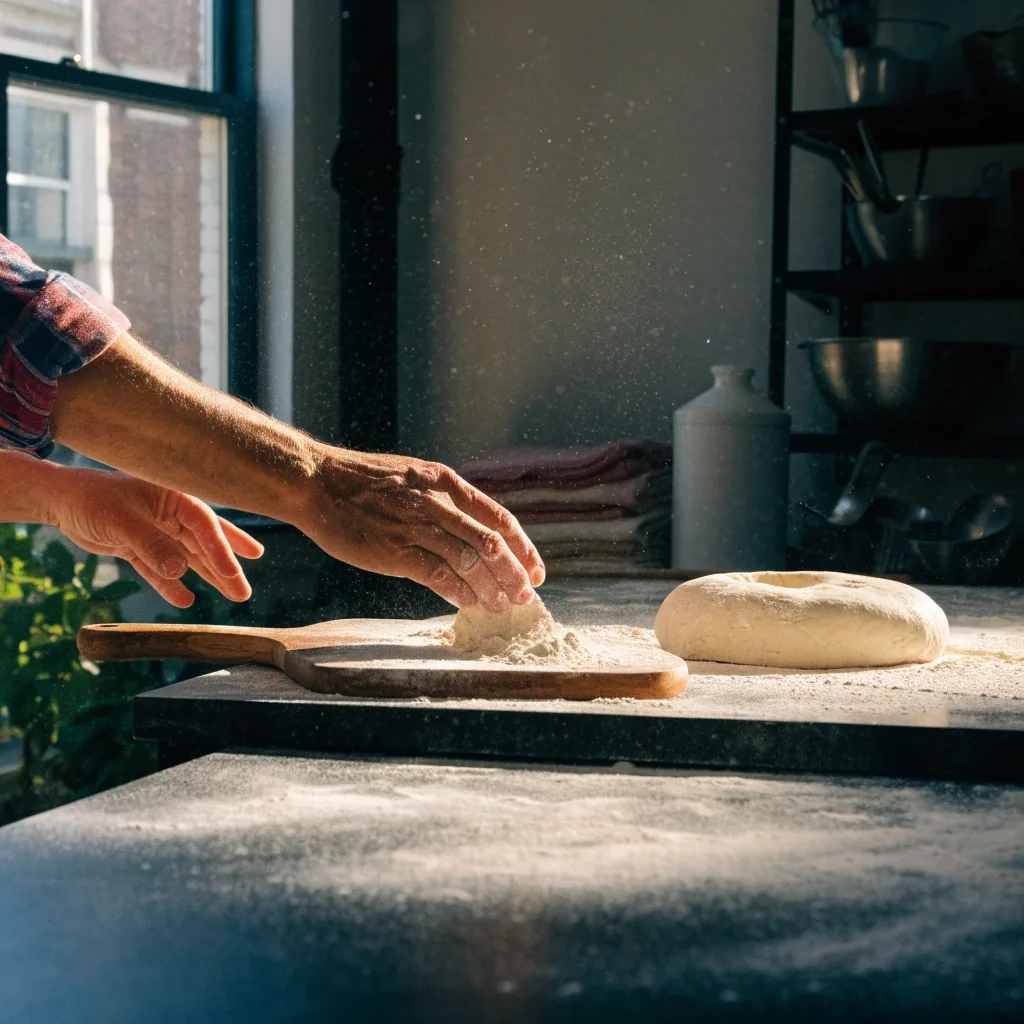
Flouring the peel before a launch, at the North Wells bench
Every recipe is baked here first. If it only works with equipment the studio owns, the notes say so.
How the curriculum is built
The order of the material is not arbitrary. Students who learn five recipes at once tend to learn none of them, so we teach one dough properly before adding styles. Each stage below is built on the one above it, and each stage is tested against what students actually struggle with rather than what looks tidy on a syllabus.
-
The dough comes first
Flour, water, salt, yeast, and time. We stay on one formula long enough that you can feel when the dough is ready instead of checking a clock. Hydration and cold ferment windows get explained here, because everything later depends on them.
-
Oven setup and the bake
Steel, stone, and rack position, with the preheat times written down. This is where most home bakes fall short, so the class spends real time on getting the surface hot and reading the crust as it colors.
-
Shaping and launching
Opening a round without crushing the rim, loading a peel, and getting the pizza off it before the dough sticks. This is the part that needs an instructor standing next to you, and it is why we keep class sizes small.
-
Regional styles, one at a time
Detroit-style and Chicago thin sit on the same dough knowledge you already built. We add styles only once the base holds, and each one comes with the pan, the cheese edge, and the bake times it needs.
If you want the written version of the first stage before you book anything, the dough and oven basics page covers it in the same order.
Read the dough and oven basicsWhere the classes happen
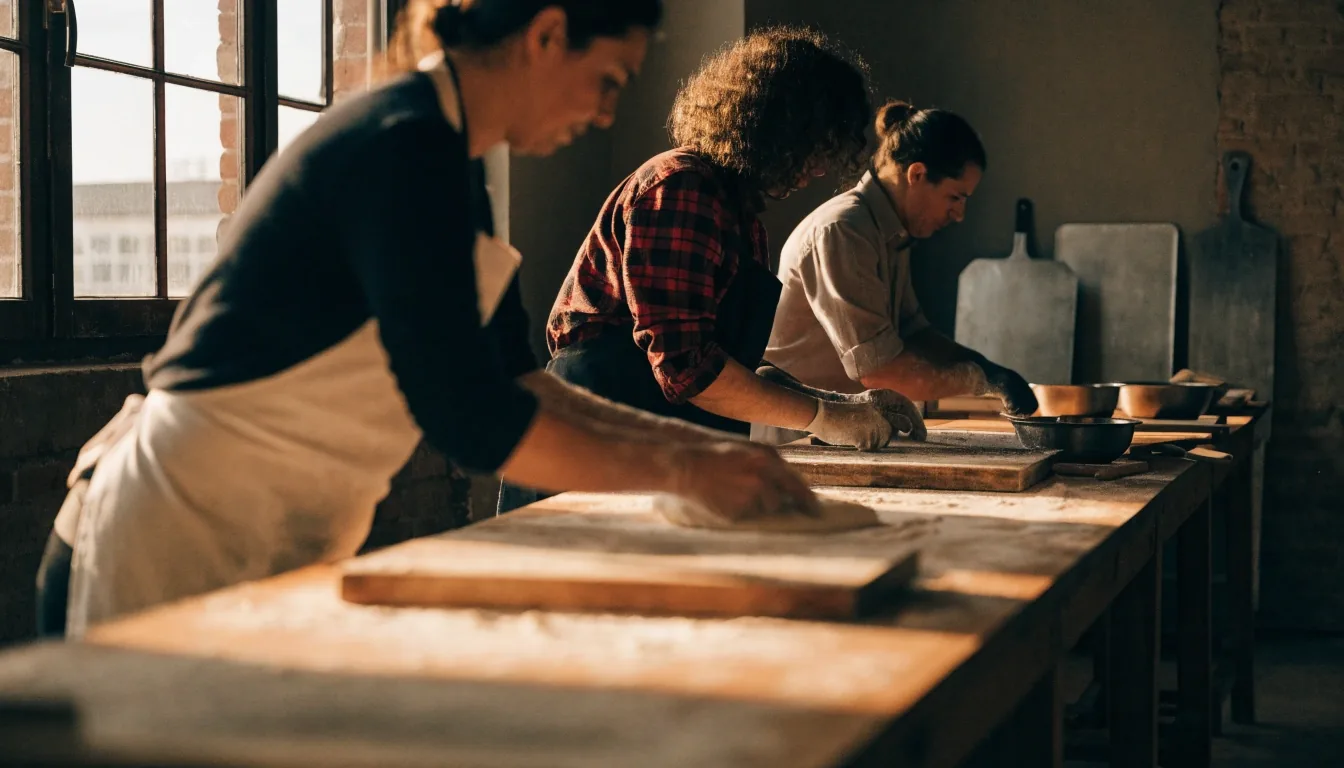
Each station has the tools you need for the step you are on, and the room is laid out so an instructor can reach every bench while your dough is in your hands. That layout is the reason the group stays small.
The studio is a working kitchen on North Wells Street, not a demonstration stage with rows of seats. Benches are set at a height for standing work, which is how dough is actually shaped, and there is a sink within reach of every position because flour gets everywhere and clean hands matter. When a class runs, the ovens are already hot and the steels are already in place, so nobody spends the first half hour waiting for equipment.
Small groups are not a marketing line here, they are a constraint we chose. An instructor who can stand beside you can catch a torn rim, adjust your launch angle, or tell you to stop kneading before you overwork the dough. That kind of correction is the whole point of a class rather than a video, and it stops working the moment the room gets too big.
Visiting the studio
- Address
- 1290 North Wells Street, Chicago, IL 60610, USA
- Phone
- +1-312-555-0723
- Hours
- Monday to Friday, 9:00 AM – 6:00 PM
If you are planning travel around a class, confirm the date with us before you book anything non-refundable.
Contact the studioTesting, feedback, and revision
Class feedback goes back into the written recipes. If a step confuses a room of eight people, the step gets rewritten, because a confused room usually means the instructions were the problem and not the students.
-
H
Notes from the bench
Questions that come up in class get written down while they are fresh. If three people ask the same thing about resting dough, that answer belongs in the recipe file, not only in the room.
-
R
Rewritten, then re-baked
Any change to a recipe is followed by a fresh bake in the studio, so we know the fix did not break a step somewhere else in the process. A recipe that reads better but bakes worse does not ship.
-
U
Updates reach the pack you own
The packs are living documents. When a recipe is updated, buyers get the update rather than a new edition to purchase. That loop is slower than publishing once and moving on, and it produces better dough.
The context we work in
Home pizza interest has been shifting for a while, and the shift shapes what we teach. People are trading restaurant occasions for meals at home more often, and frozen pizza has moved from a backup in the freezer to a planned dinner in some households. Both changes raise the bar for what a home bake is expected to be.
Trend reporting on the category points the same direction. Wood-fired and Roman-style crusts keep drawing attention as artisan options, and regional styles have gained real ground, with Detroit-style pizza entering the top five in 2026 style rankings and Chicago thin rising into the top tier. None of that is a reason to chase equipment you do not own. It is a reason to understand the methods behind those styles, because most of them translate into a standard oven once you know what the dough and the bake are doing.
Wood-fired and Roman-style crusts are the two artisan options most often named in category reporting.
Detroit-style and Chicago thin both moved up in 2026 style rankings for the home-cooking audience.
We keep every class on methods that hold up in a normal kitchen, regardless of which style is trending.
The pizza styles guide on this site compares those regional styles side by side if you want the detail.
Who this is for
Our students are home cooks who want a repeatable result rather than a one-time stunt. Some have never made a yeasted dough and are not sure what a proof looks like. Others bake bread every week and come to us for help with high-hydration dough, cold ferment schedules, and getting a crisp base out of an oven that tops out well below a pizzeria's.
Both groups get the same respect in the room, and both get the same starting point, because the fundamentals do not change with experience. If you are the kind of cook who wants to understand why a step works instead of following it on faith, you will fit here.
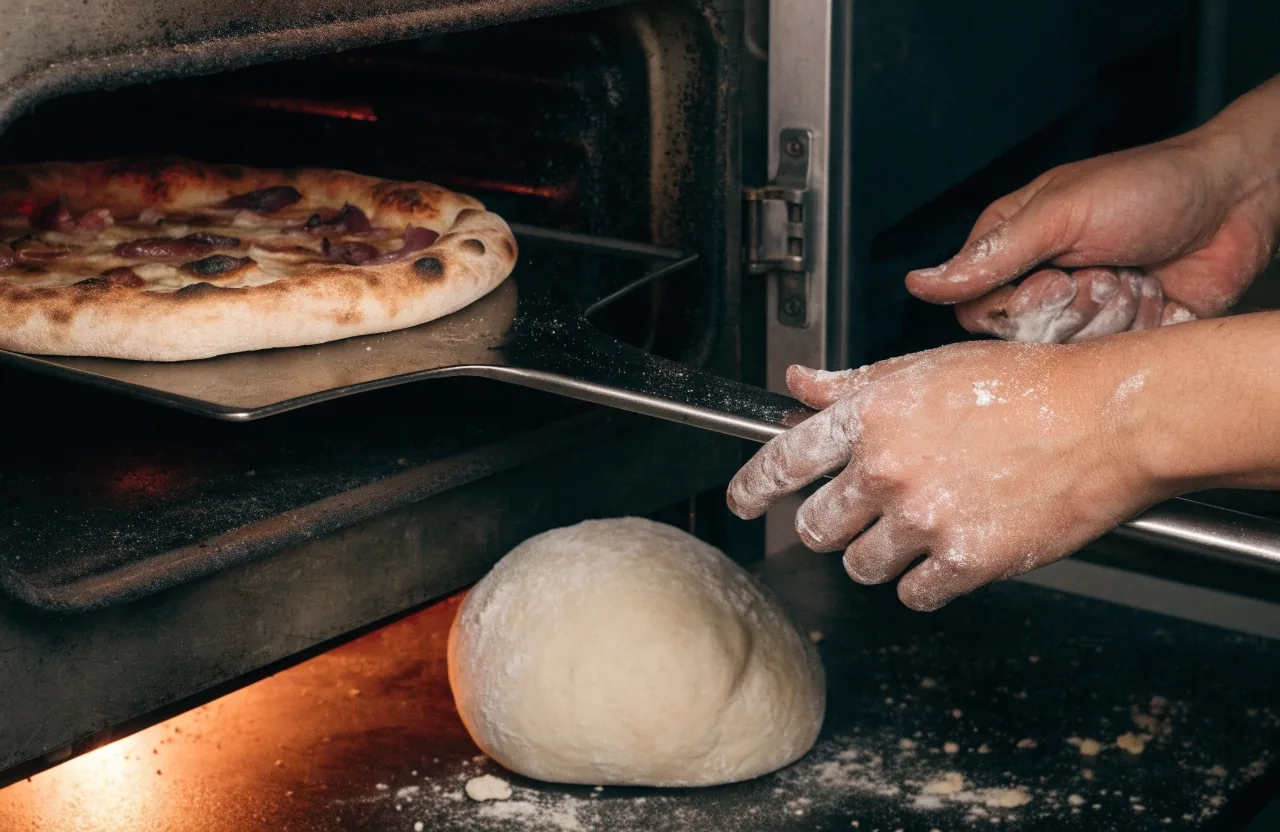
A home bake on a steel, door cracked for the last minute
What we do not claim
Limits we name up front
Our method does not match a commercial pizzeria, and we do not promise a specific result from any single bake. We do not run a certification program and we do not claim affiliations we do not have. If that reads as a lower pitch than you expected, it is also why the recipes tend to work: nothing in them depends on a claim we cannot stand behind.
What we can tell you
What happens in our kitchen, what we have tested and re-baked, and where the limits of a home oven sit. That is the whole promise. If you want to know whether a recipe will work with the oven and the time you actually have, describe both when you get in touch and we will point you to the pack or the class that fits.
Questions we get before a class
Do I need any equipment before my first class?
No. The studio has the peels, steels, stones, and pans you will use during a class, so you can learn the method before deciding what to buy. If you already own a steel or a stone, bring a note about its size and we will work the bake times around it.
Can I bring a group, or arrange a private session?
Yes. Private group sessions run in the same North Wells Street kitchen with the same hands-on format. Call the studio at +1-312-555-0723 or send an inquiry through the contact page with your preferred dates and how many people you have, and we will confirm what the room can hold.
I am deciding between two recipe packs. Which one should I start with?
Tell us what your oven does and how much time you have in a normal week. A cook with an hour on a Sunday and a cook with a full day to ferment are pointed to different packs. There is no wrong starting point, but there is a better one for the schedule you actually keep.
How do recipe updates reach me after I buy a pack?
When a recipe is rewritten after class feedback, the revised version goes to everyone who bought that pack, at no extra cost. The changes are usually small, such as a clearer description of dough readiness or a corrected rest time, and they are worth having because a home oven is unforgiving about timing.
Do I need to travel to Chicago to use the recipes?
No. The written packs are built for a home kitchen anywhere, and they assume nothing beyond a domestic oven and a scale. The classes are the part that happens at 1290 North Wells Street. If you are visiting for a class, confirm the date before booking travel.
How to get in touch
Questions about a recipe pack, a class date, or a private group session all go to the same place. Call the studio at +1-312-555-0723 during working hours, Monday to Friday between 9:00 AM and 6:00 PM, or send an inquiry through the contact page and we will reply with a straight answer about whether the class or the pack fits what you are trying to bake.
Studio
Acf-P Pizza Academy
1290 North Wells Street, Chicago, IL 60610, USA
+1-312-555-0723
Monday to Friday, 9:00 AM – 6:00 PM
If you are weighing two packs, describe your oven and your usual baking time. That is usually enough to choose.